Los últimos CDC publicaron que los síntomas pueden aparecer de 2 a 14 días después de la exposición al virus. Las personas con estos síntomas pueden tener COVID-19:
- Fiebre o escalofríos
- Tos
- Dificultad para respirar o falta de aire
- Fatiga
- Dolores musculares o corporales
- Dolor de cabeza
- Nueva pérdida del gusto o del olfato
- Dolor de garganta
- Congestión o secreción nasal
- Náuseas o vómitos
- Diarrea
Esta lista no incluye todos los síntomas posibles. Los CDC afirman que continuarán actualizando esta lista a medida que aprendamos más sobre el COVID-19. Los CDC también aconsejan buscar atención médica cuando se presenten signos de advertencia de emergencia para el COVID-19. Si alguien muestra alguno de estos signos, busque atención médica de emergencia de inmediato:
- Dificultad para respirar
- Dolor o presión persistente en el pecho
- Nueva confusión
- Incapacidad para despertar o mantenerse despierto
- Labios o cara azulados
Esta lista no incluye todos los síntomas posibles. Por favor, llame a su proveedor médico si presenta cualquier otro síntoma que sea grave o le preocupe.
Llame al 911 o avise con anticipación a su centro de emergencia local: Notifique al operador que está buscando atención para alguien que tiene o puede tener COVID-19.
Prueba rápida de antígenos para COVID-19
Datos rápidos:
- Motivo: Infección actual
- Método: Hisopado nasal
- Resultados: Entregados a usted electrónicamente el mismo día en su Portal LabFinder
- Prueba: Quidel Sofia 2
- Precio: Pago particular: $125 solo por la prueba
- Autorización de uso de emergencia de la FDA
La prueba rápida de COVID se administra en el lugar de atención mediante un hisopado nasal por un asistente médico o un proveedor de atención primaria. La prueba rápida de antígenos puede devolver resultados que muestran si el paciente está infectado con COVID-19 agudo el mismo día, en contraste con la espera estimada de 3 a 5 días para la mayoría de las pruebas de hisopado nasal.
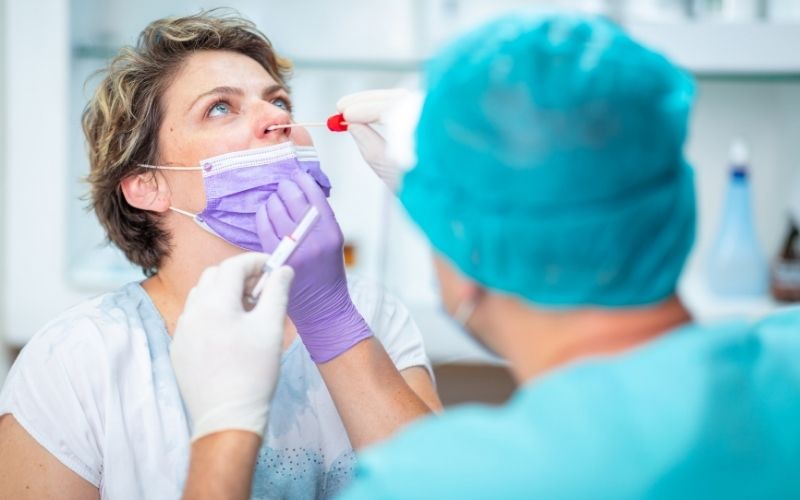
Las pruebas rápidas de COVID-19 revelan únicamente si el virus de la COVID-19 está presente actualmente. No evalúan si el paciente se ha infectado previamente por COVID-19 o si hay algún otro virus presente en este momento. La prueba no reacciona ante la presencia de ningún otro coronavirus estacional.
Debe hacerse una prueba rápida de COVID si usted:
- Creo que pueden tener COVID-19
- UNA NECESIDAD de resultados en el mismo día
- Necesito los resultados para volver al trabajo o a la escuela.
- Necesita resultados para viajar o ser aceptado en el estado o en los EE. UU.
- No te importa pagar la prueba en efectivo.
Prueba rápida de hisopado para COVID-19: NAAT molecular
Datos rápidos:
- Motivo: Infección actual
- Método: Frotis
- Resultado en: Entregado electrónicamente el mismo día en su Portal LabFinder
- Prueba: Abbott ID Now
- Precio: $125 para la versión «solo prueba»
- Autorización de uso de emergencia de la FDA
La prueba rápida de PCR para COVID-19 se administra en el lugar de atención mediante un hisopado nasal por un asistente médico autorizado o un proveedor de atención primaria. Los resultados muestran si un paciente es positivo con una infección aguda de COVID-19 el mismo día, en contraste con el tiempo de espera estimado típico de 3 a 5 días para la mayoría de las pruebas de hisopado nasal.
Debe hacerse una prueba rápida de PCR para la COVID-19 si:
- Creo que pueden tener COVID-19
- UNA NECESIDAD de resultados en el mismo día
- Necesito los resultados para volver al trabajo o a la escuela.
- Necesita resultados para viajar o ser aceptado en el estado o en los EE. UU.
Datos rápidos:
- Motivo: Infección actual
- Método: Frotis
- Resultado en: 2-3 días
- Prueba: Hologic, Roche
- Costo: cubierto por la mayoría de los seguros; pago privado $100
- Autorización de uso de emergencia de la FDA
La prueba molecular PCR para el COVID detecta el material genético del virus mediante una técnica de laboratorio llamada reacción en cadena de la polimerasa (PCR). Esta prueba también puede llamarse prueba de PCR. Un trabajador de la salud recolectará líquido de un hisopado nasal. Podrá ver los resultados en de tres a cinco días si se envía a un laboratorio externo. La FDA aprobó ciertos kits de pruebas caseras para el COVID-19, disponibles únicamente con la aprobación de un médico. La muestra se envía luego por correo a un laboratorio para su análisis. Recomendamos encarecidamente a los consumidores que no compren pruebas caseras no aprobadas. Estas pueden ser inexactas y poco seguras.
Debe hacerse una prueba molecular PCR para el COVID si usted:
- Crees que puedes tener COVID-19, pero no hay prisa por obtener los resultados.
- No hay necesidad de resultados inmediatos. Dispuesto a esperar 2-3 días.
- Es posible que quiera que el seguro cubra la prueba.
Datos rápidos:
- Propósito: Exposición previa
- Método: Extracción de sangre
- Resultado en: 3-5 días
- Prueba: Beckman Coulter, Roche
- Costo: cubierto por la mayoría de los seguros; pago privado $50
- Autorización de uso de emergencia de la FDA
La prueba de anticuerpos de la COVID-19 es un análisis de sangre que proporciona la detección cualitativa y cuantitativa de anticuerpos IgG contra el SARS-CoV-2 en personas con sospecha de tener COVID-19. Después de la infección, el antígeno del virus estimula el sistema inmunológico para producir anticuerpos que se pueden detectar en la sangre.
Combinado con la prueba de hisopado PCR (véase más abajo), la prueba de sangre de anticuerpos COVID-19 ofrece una valiosa herramienta de diagnóstico para identificar a los pacientes infectados. Según estudios recientes, los anticuerpos contra la COVID-19 no son detectables antes de los 3 días posteriores al inicio de los síntomas o al menos entre 7 y 10 días después de la infección.
Sin embargo, las pruebas de anticuerpos pueden detectar una infección pasada porque los anticuerpos específicos del virus pueden persistir en la sangre durante varias semanas o meses después de la aparición de los síntomas. Dado que el momento exacto de la infección a menudo se desconoce, la combinación de la prueba de hisopado nasal y el análisis de sangre puede mejorar la precisión del diagnóstico de la COVID-19.
Debe realizarse una prueba de anticuerpos contra la COVID-19 si usted:
- Crees que puedes haber tenido COVID-19.
- Deseo ver si podría ser un donante de plasma sanguíneo.
- No hay necesidad de resultados inmediatos. Dispuesto a esperar de 3 a 5 días.
- Es posible que quiera que el seguro cubra la prueba.
Para obtener más información sobre las pruebas de COVID para su organización, haga clic para saber más:
Pruebas in situ y pruebas en el lugar de trabajo para la COVID
Nota: Medical Offices of Manhattan no realiza pruebas ni atiende a menores de 18 años; esto incluye todas las pruebas de COVID. Tampoco realizamos ninguna prueba rápida de RT-PCR para COVID.